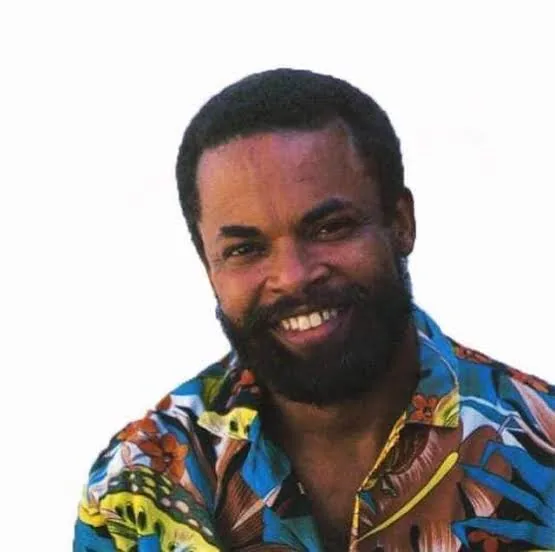
Juan Márquez Gómez, Cuban composer, arranger, and guitarist, was born in Holguín on July 4, 1929. He studied music with his father, the renowned Cuban conductor Juan Márquez Gómez, who was a teacher and conductor of the city's Municipal Band for decades. He studied guitar from a young age, mastering it very well.
In 1948, he joined the traditional and very Holguín-based Hermanos Avilés Orchestra, the oldest of Cuban musical groups (1882), from his hometown. He began writing orchestrations in the early 1960s for the local group and for the Riverside Orchestra, which released some of his songs sung by Tito Gómez. He worked in Havana cabarets. He was also a member of a jazz group with trumpeter Nilo Argudín, pianist Rafael Somavilla, and percussionist Guillermo Barreto.
Juanito Márquez composed the boleros "Alma con alma", "Que desesperanza" and "Como un milagro"; "Dulce de guayaba" (danzón-chá); "Esos tiernos ojos" (bolero-chá); the Chachachá "Naricita fría", as well as "Pituka la bella", "Arrimate pa'cá", "Cuidao con la vela", "Joropero" and "Tengo ahora una chiquita".
He created the Pacá rhythm, a blend of joropo and Cuban rhythms, which achieved national success in the 1960s and was widely danced and popularized. In the early 1970s, he lived in Spain, where he continued his respected work as a musician and arranger. He recorded several albums of his own compositions and versions of songs by other artists with a group he led.
Juanito Márquez later settled in the United States, where his career continued to flourish, earning him prestigious awards. He has worked with renowned artists such as Julio Iglesias and Paul Mauriat, and has participated in important recording projects, including Gloria Estefan's album "Mi Tierra."