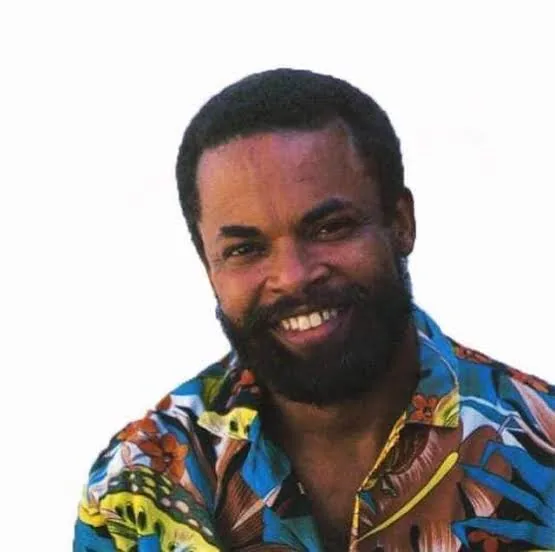
Sergio Vitier García-Marruz is a great composer and concert pianist, as well as one of the most important guitarists in Cuba. He was born on January 18, 1948, in Havana. His parents, Cintio Vitier and Fina García-Marruz, are renowned poets and essayists.
He carried out his musical studies at the Amadeo Roldán Conservatory (Rastro No. 1 and Espada. Centro Habana. Havana). He receives guitar lessons with Elías Barreiro and finishes them with Isaac Incola. He learned harmony and composition with Federico Smith and composition with José Ardévol and Leo Brouwer. At the Higher Institute of Art (ISA) (Calle 120 No. 1110 e/ 9na y 13. Cubanacán. Playa. Havana) he was a student of José Loyola and Roberto Valera. He also completed parallel learning in Orchestration, Harmony, Counterpoint and Composition.
He began his artistic career with Los Armónico de Felipe Dulzaides, from 1964 to 1966. Later he became part of the Cuban Orchestra of Modern Music (1967-1969), and he belonged to the ICAIC Sound Experimentation Group from its beginnings in 1969 to 1978.
Sergio Vitier founded the ORU group in 1968, composed of Jesús Pérez, Merceditas Valdés, Guillermo Barreto, Orlando López (Cachaíto), Gema Corredera, Javier Zalva, Genaro García Caturla, among others. This group has brought together musicians belonging to great musical lineages in Cuba, carrying out research work on elements of folklore with African and Spanish roots, which is combined with their own authorial creation and that of other contemporary composers.
Among his songs we can mention: Love and sacrifice; Effect; Angels; mistimes; The singing elf; I spoke with my loneliness; The children II; Lie; Pedrosa; Because of the sun and the thirst and I can lie down to die.
One of the strongest tendencies of his work as a composer has been the creation of music for films. In his works for cinema we can see: Notes for the history of the labor movement", (Documentary); Capablanca; Fifty-five brothers; Che; In a certain way; Sportsly; Right of asylum; The brigadista; The specter of war; Everyone's October; The Moncada program; Girón; Guardafronteras; "Men of the ring", (Documentary); Homage to Benny Moré; Head of Column 4; The earth and the sky; Maluala; Opening; Love me and you will see; Tatu: Che in the Congo; A happy summer and A woman a man.
In its various instrumental combinations there are: About a Yoruba theme, for flute, oboe and guitar; Danzarias, for chamber group, Cuban percussion and two voices; Detachments, for symphonic orchestra and Cuban percussion; La utopia, lyrical, rhythmic and final, for wind quintet; Small rhythm session, for Cuban percussion; Requiem by Ernesto Guevara (in collaboration with Rogelio Martínez Furé), text: Tomás González, for prepared piano, guitar, flugelhorn, bongo, male voice and batá drums; Raíces, for prepared piano, electric guitar, xylophone, tape recorder and two male solo voices and Tres trenos, for flute, prepared piano, guitar and tape recorder.
Sergio Vitier has in his dance music compositions: Ad Limitum; Amanda; I sing to kill the snake; From the barracks to the trench; Duo of always; Faust; flora; Fried; The hunt; Mariana; Michelangelo; Palenque; Rite of dance and Yerma. In his music for theater are: The Kremlin carillon; Divine words; Epur does move; Love Duo; Rock with bata; The standard bearer; The laughable and tragic rise of Rubén Zaldívar; Butter; Mariana Pineda Overture and ending; They are crazy and Tema en re. Finally, in his works for television series we can see: The echo of the stones; The man who had to be killed; It has had to be in silence (in collaboration with José María Vitier); Southern Front; Julian Guerrero; Julito the fisherman (in collaboration with José María Vitier); Luis and John in Morazán; Heading to sunrise and Transparencies.
In his discography there are works such as: Cuerdas Cubanas (album for the 20th Anniversary of his stage debut); Tributes (EGREM Award 1997); Visions Sound Experimentation Group of the ICAIC (Five Volumes); CD Pictures 350 Postcards about Cuba; Travesía (CUBADISCO Award 2000); Sergio Vitier/Martha Valdés: Our Song; Sergio Vitier: Habanero Concert (Symphonic Music).
Sergio Vitier has received the Cubadisco Award on several occasions: Travesía (2000), Instrumental Music Category; Grand Prize Songwriting (2001); Smelling Oak (2004), Soundtrack Category and Oru, ritual and Cuban-style party (2008), in Folk Music.
As a soloist and also with his group, he has performed on international stages: Canada, Czechoslovakia, Bulgaria, Poland, Italy, Russia, Colombia, Venezuela, Brazil, Spain, France and the United States. He has given conferences and master classes at universities, research centers and other cultural institutions in several countries.
As expressed in his official resume, Vitier "is a great researcher of the roots and traditions of the formants of Cuban culture, in his music you can appreciate the presence of cells of Yoruba and Congo-Bantu origin, in organic fusion with basic elements of Hispanic sound, essentially in relation to the guitar. To this we must add his deep knowledge of the popular traditions of the island, as well as his great mastery of contemporary composition and orchestration techniques. All these factors are related and fuse in their work to make it one of the most original, prolific and innovative in the world of Cuban music of the last thirty years.”
Sergio Vitier's faculties for playing the guitar are, without a doubt, very vast: formidable left hand, complete concept of interpretation and a powerful sound, make this composer one of the greatest guitarists in Cuba.