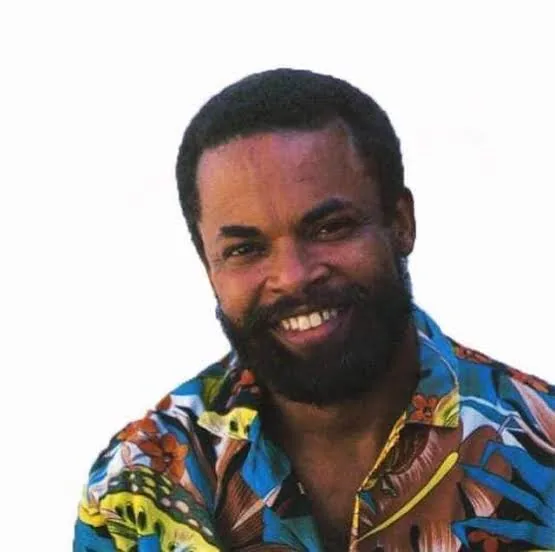
Osdalgia Lesmes Etchevarría, Cuban singer, songwriter and actress; He was born in the month of May in Luyanó, Havana. In 1986, she was awarded by the Hermanos Saiz Association, with a First Mention for her poetry notebook “Una piece soy” and was a member of the 20th Anniversary artistic brigade, which brought together young poets, writers, visual artists and troubadours. In 1988 he joined the Cine Club “Sigma” group, directed by filmmaker Tomás Piard. She acts in fiction short films and is called to compose the cast of the avant-garde fiction feature film “The Infinite Possibility.”
He carried out his artistic training at the National School of Theater Instructors, a center where he enrolled in 1989 and where he finished his studies in 1992.
He began his professional life and made his debut that same year as a member of the Las Sepias de Fuego quartet, at the Cabaret Parisién of the Hotel Nacional (Calle 0 corner 21, Vedado. Plaza de la Revolución. City of Havana). Later he joined several Cuban groups and orchestras, in which he performed different musical genres such as Son, Bolero, Feeling, Jazz, Balada, Timba, Salsa, Afro, Guaracha and Rumba. Among them, in 1994 he joined Las Nuevas Mulatas de Fuego, where he worked alongside José Luis Cortés who was its director.
A year later, Osdalgia joined the female group Canela, where she served as lead singer and recorded the CD The moment arrived, with the Welt Wunder Records label and went on an international tour touring several countries such as Germany, Holland, Belgium and France. In 1996 he worked with Las Chicas del Sabor and with Perspectiva, with the latter he offered concerts at the Casa de la Música. He has participated in the Atlantica Festival in the Canary Islands and in the Afro-Caribbean Festival in Veracruz, Mexico. In 1997 he made rock and pop in the group Aries and ventured into Feeling and Bolero. He performed at the Latin Music Festival in San Benedetto del Tronto, Italy.
In 1998, he signed an exclusivity contract with the French record label Lusafrica; He begins his collaboration on the CD Afrocuban Jazz Project, by Orlando Valle (Maraca), where he shares with relevant figures of Cuban music such as Tata Güines, Barbarito Torres and Cascarita.
On this date, his first solo album, titled La Culebra, was released, which was directed by José Luis Cortés and accompanied by NG La Banda. With this album Osdalgia became known internationally. It features songs that were popularized by Benny Moré.
As a result, she was named in World Planete Musicale magazine as the Sentimental Girl, and also in Music Info magazine she was placed at number ten on the French, Belgian and Dutch radio broadcasting charts in 1999. This year she went to Europe with Lusafrica and NG la Banda, on that occasion she performed in Italy, France, Belgium and Spain.
He has performed a concert at the New Morning and at the Disney Land Festival with Celia Cruz.
In 2000, I shared the stage with Colé-Colé; He sang an occasional duet with the famous Gilberto Santa Rosa in Panama. This same year, in April he obtained four nominations for La Culebra, at the Cubadisco in the categories of First Feature, Current Popular Dance Music, Musical Production and Recording. It won the Cubadisco Grand Prize and the Prize for the best Current Popular Dance Music album. Together with NG La Banda he performed concerts in Morocco and then in Italy; in the Canary Islands and in Panama with Lusafrica.
Likewise, Osdalgia Lesmes, after her successful presentation in her memorable concert televised live from the National Theater (Calle Paseo y 39, Vedado, Plaza de la Revolución. Havana), was named by the press The New Voice of Cuba. The video clip La Culebra is nominated for the Lucas Awards in the categories of Best New Video and Best Female Video. It was presented in the Adolfo Guzmán Cuban Song Contest, at the end of 2000, where it won Third Prize and also an excellent opinion from specialized critics.
Their second album, Mi Armonía, was recorded in January 2001, under the Lusafrica label and directed and musically produced by José Luis Cortés. Jorge Luis Chicoy (guitar), Feliciano Arango (bass), Elpidio Chapotín (trumpet) and keyboardists Emilio Morales and Miguel Angel de Armas, among others, participated in this. This CD features eleven songs, including a Spanish version of the Summertime Jazz classic; the Son Montuno, Let my teeth fall out; and the bolero, Fiebre de ti, by Juan Arrondo; and others authored by Osdalgia such as No me detentes and Tu Beribé.
That year he also founded his ensemble, with the intention of approaching the sound of the ensembles of the 1940s and 1950s but with an imprinted modernity. This is made up of young graduates from the different music schools in the country. Its instrumental format is composed of lead vocals, guitars, choir, bass, piano and keyboards, major and minor percussion.
She competed in the OTI 2001, as a composer, a contest where she was a finalist and received great success from the public. His song titled Who told you? It was performed by the well-known singer Vannia Borges. Around this time, he sang in the Principality of Monaco with the Tropicana Show, in France with Lusafrica and in Costa Rica with Charanga All Stars.
In 2002, he traveled with his group to Spain, Cape Verde, Portugal and France. Her second video clip, Tu Beribé, was nominated for the Lucas Awards in the Best Female Video category. In 2003 he participated in the film “Cuban Music, the Children of Buena Social Club” in Japan.
In April 2004, he began recording his third album, produced by Juan Manuel Ceruto, and with the Lusáfrica record label. Sonan los hides, was nominated for the Cubadisco awards in the Traditional Popular Music category, covers genres of Cuban music, Bolero, Guaguancó, Danzonete, Habanera and Son. In May she undertook an international journey, as a guest of Habanos S.A., along with relevant figures of Cuban culture such as Gonzalito Rubalcaba, Tata Güines and Pachito Alonso and his Kini Kini.
Between November 2004 and March 2006, he performed in Sardegna, Italy. Upon his return to Cuba he began acting in El Gato Tuerto. In April I have offered a concert at the Heredia Theater in Santiago de Cuba. In 2005, his video clip, La Session, was nominated for the LUCAS, where he received an award. This is considered by specialized critics, to date, one of the 100 best Cuban video clips. He participated in the CD Cuba le sings to Serrat.
In 2006 it was presented at the Kars Festival, in Türkiye. In 2007, he went on a tour to present the CD Suenan los hides, in Switzerland.
In 2010, I have offered charity concerts in Panama. The following year, 2011, he performed several recitals on the Finnish cruise ship Amorella, of the Finnish company Viking Line. He also starred in a great concert at Wynwood Walls on one of the days of the Global Cuba Festival in Miami.
As an actress Osdalgia Lesmes Etchevarría, she has participated in the teleplay, El Sueño y un día (2002), which was directed by the prominent video, TV and film director Tomas Piard. I have composed for this and performed the song, Of my dream and of you. It was also shown in Senobio (Puri) Faget's documentary film, El son te came out round (2002); in an international film co-production accompanied by young and prestigious Cuban musicians, among them Samuel Formell and Robertico Carcasés; and for Cuban Television in the serial Operación Coraje (2002). Added to these are the 2006 Swedish film, The Condom Queen, directed by Silvana Ceschi and Reto Stamm; in 2009, One among thousands, a US production directed by Carlos G. Maier; and in 2010 the Cuba/Italy co-production by Claudio del Punta, Una Danza para mi Habana.
He has collaborated and shared stages with artists of the stature of José Luis Cortes, Compay Segundo, Omara Portuondo, Cesaria Évora, Celia Cruz, Gilberto Santa Rosa, Pío Leyva, Gonzalito Rubalcaba, Elena Burke, Beatriz Márquez, Ela Calvo, Lino Borges, Mundito González and Chucho Valdés.
The repertoire of this excellent Cuban performer covers numerous musical genres such as Son, Bolero, Guaracha, Feeling, Rumba; all with some tendency towards fusion with international rhythms. Also Cumbia, Conga, Merengue and Blues.
Osdalgia performs songs from the archive of Cuban music from the 1930s to the 1960s and from his own authorship. Some of his compositions have been created for soundtracks in record productions, film and television. Its themes refer to the place of women in society, their autonomy and their role before men. They reflect situations, feelings, attitudes, dreams, that is, they are the reflection of the author's interpretation of life.
In her work as a composer, we find songs such as: Water in the soup, Reckoning, Allegation, Something personal, Unsuspected soul, Unfaithful love, Angels and tattoos, Before I leave, That first love, Women's affair, Dare, Ay!... black! , Bar Barbarán, Beribé, Calla corazón, Like the flowers, With a stick and a can, Creole, When you leave, How much?, Be careful!, From Cuba, From my dream and from you, Definitely, Where is my dark hair?, My boyfriend's mustache, The Empire of my heart, Elegy, It's the echo of love, It's time to talk, This life, I'm back, False currency, Moon halo, Today what to do without you?, Enlighten me, Jonjolí, The whore arrived, The oyster, The queen of the condom or, (Royal palm), The session, Yours is not enough, Bad man, My harmony, My imagination, My afternoon, It is not possible, Don't stop me, Don't go, Prayer and prayer, Nightmare, How hot!, Moans, Who told you?, I want, Get together, Rumbero Homenaje, Alone, Your platonic love, Your beribé, Your song is made, Any given day, One life, Voices from the carnival, I'm going to heat up Havana!, I am not water for your thirst.
Osdalgia Lesmes Etchevarría is internationally recognized as the Daughter of the Buena Vista Social Club. Throughout his career he has managed to accumulate various awards, such as: First Mention Award for the poetry notebook Una piece soy, given by the AHS (1986); AWARD for Best Current Popular Dance Music Album and Cubadisco Grand Prize (2000); Adolfo Guzmán Competition Interpretation PRIZE (2000); Nomination for Best Composition and Performance at OTI (2001); Award for Best Traditional Popular Music Album at Cubadisco (2005); LATIN GRAMMY shared “Best Tropical Album”, for the CD “Cuba canta a Serrat” (2005); Award for Best Female Video Clip and Best Traditional Music Video Clip, Lucas (2005).
Discography: La Culebra (1999); My Harmony (2001); The Leathers Sound (2004)