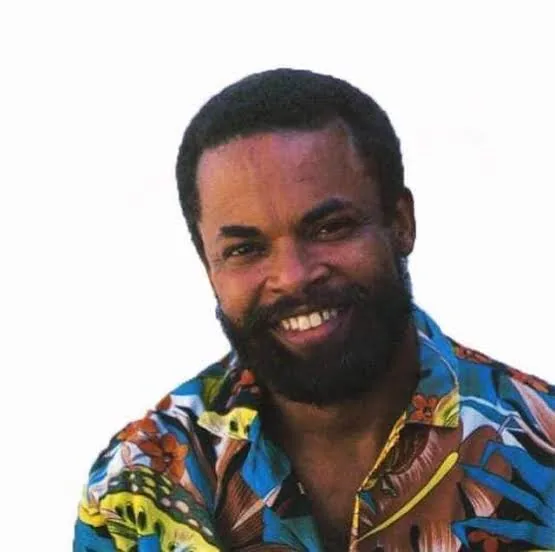
N.G. La Banda, Cuban musical orchestra created in 1988, by the flutist José Luis Cortés (El Tosco). His name means New Generation. The group's debut took place at the Café Cantante of the Bertolt Brecht theater in the capital, on April 4, 1988.
Its director, an artist with great experience, since he had integrated two of the most prominent groups within the Cuban musical framework, Los Van Van and Irakere, set the objective of fusing the simplicity and attractiveness that characterize the music performed by Los Van Van and the complexity and elaboration of the music of Irakere. That is, a music where jazz is mixed with purely Cuban rhythms, but with a more modern conception of dance music.
N.G. It was made up entirely of musicians of high performing quality who had been part of important Cuban groups, such as La Ritmo Oriental; Irakere and Pachito Alonso. Hence its brass section was known as the brass of terror. Among them we can mention: José Luis Cortés (director, flutist and voice); Germán Velazco and Carlos Averhoff (saxes); Elpidio Chapottin, José Miguel Crego (El Greco) and Juan Munguía (trumpets); Tony Calá and Issac Delgado (singers); Juan Nogueras (Wikly) (tumbadora); Feliciano Arango (bass); Giraldo Piloto (drums); Rodolfo Argudìn (Peruchín) (piano); Miguel Ángel D’Armas (keyboard) and Bárbaro Argudín (bongo).
N.G. The Band imposed a timbre, a style, a way of making Cuban dance music. The music of this orchestra has always been differentiated by having a peculiar rhythmic richness with arrangements of extraordinary precision, harmonies with complicated structures and mixtures with funk, blocks, percussion sections, sparkling melodic ideas and Afro-Cuban dance music. This last characteristic is evident in songs such as Los Sitios Entero and Santa Palabra.
The Cuban musical genre that we currently know as Timba was conceived by N.G. La Banda, a group considered by many to be the inventor and initiator of this musical style, which was not Son, Songo or Rumba, nor Rock, Jazz or Funk, but had a lot of all these styles inside. He was one of the greatest influences on the great Timber groups that followed in his footsteps. Most of the '90s outfits came straight from their bases.
The group's first record production was titled "No puede tapar el sol" (1988). It was composed of some of the band's first hits such as "La expresiva" and "Los Sitios Entero". The second album "Salseando" (1990), was made with Malena Burke, in it they perform different genres such as Guajira, Guaguancó, Chachachá and Son. Topics like Me voy pa'l pueblo and Bruca Maniguá appear.
In 1993, N.G. He recorded several albums, "En la calle"; "De N.G para Curacao"; "Panoramic Cabaret" and "N.G arrived, camará”.
Various songs have been musical hits both nationally and internationally. With them he contributed to giving a great turn to Cuban popular music, among them are: Santa Palabra, La Expresiva, Lelolei, La Apredora, La Bruja, Echale limon, La Cachimba among others, and they have become one of the best Cuban bands.
N.G. It is considered a luxury orchestra by many specialized critics. Among them Ben Tavera King, from San Antonio Espress-News, United States, expressed: It is probably the best Salsa orchestra in the Western Hemisphere.
Their productions are varied, among them we can find from a live album "En Directo desde el patio de mi casa", to a jazzy discharge such as "Our man in Havana". It also has a compilation made in 1997, which includes some significant and popular songs, "Best of N.G. La Banda".
Currently the orchestra has among its members young talents of Cuban music. It has four female voices maintaining the vocal timbre that has characterized it since its foundation, with Tony Calá.
This group not only performs popular music through which it makes its followers dance, but also does excellent work with instrumental music and Jazz, due to the virtuosity exhibited by its musicians.
N.G. The Band performs in various Havana clubs, filling the night with performances with great rhythm and Cuban flavor, ensuring that the public enjoys an unforgettable evening.
In 2010, N.G. released a new phonogram called Mis 22 años, produced by EGREM (Calle 3ra No. 1008 e/ 10 y 12, Miramar, Playa. Havana). With this the group makes up for an absence of several years without showing its followers a volume of it. This album brought together important practitioners of Cuban dance music in the country, among whom are: Juan Formell, Chucho Valdés, Adalberto Álvarez, Rafaelito Lay, Paulito FG, Lazarito Valdés, Manolito Simonet, Pachito Alonso, David Calzado and César (Pupi) Pedroso, who were accompanied by members of their groups. There are also soloists such as Haila María Mompié, Vania Borges and Osdalgia, among others.
Each and every anniversary of N.G. La Banda, have been and are celebrated at La Tropical (Avenida 41 and 46. Playa. Havana). For this celebration, it is common to organize a large concert, in which the best Salsa orchestras in Cuba perform.
N.G. He has taken Cuban music to countless stages around the world and has performed in the best concert venues on the European continent such as Frankfurt Salsa Festival, Holland Salsa, The Nice Jazz Festival, The Parls Caribbean Festival, Salsa Festival in Madrid, Festival de Soneros de Santa Coloma, Festival de Salsa de Puerto Rico, Festival de Soneros de Santa Cruz de Tenerife, to name a few.
Discography: You can't cover the sun (1988), Salseando (1990), On the street (1993), De N.G. for Curaçao (1993), Cabaret Panoramico (1993), NG arrived, camará (1993), N.G. The Band. La que manda (1994), The Witch (1995), Échale Limón (1995), En Directo desde el patio de mi casa (1995), Nuestro hombre en La Habana (1995), "Best of N.G. La Banda" (1997), Son Cubano (2000), Bailemos. N.G. The Band performs songs from Almeida (2006) and Mis 22 años (2010).