The festival known as Altar de Cruz or Cruz de Mayo, is of Spanish religious origin, and although it takes place within the framework of all the peoples of Christianity, it was in Spain where profane elements were added, and it became a popular festival. It was established in the towns that were colonized by the Hispanics, whose inspiration was to praise the invention of the Cross.
It is part of the mixture of two festive currents, the pagan ceremony of the arrival of spring in many territories and the establishment by the Catholic Church in Rome of the Day of the Holy Cross.
This festival came to the Cuban archipelago brought by the Hispanic conqueror. In Cuba in the 17th century it reached a great boom, which led to strong popular roots. It was in the eastern zone where it was carried out the most, especially in the town of Santiago de Cuba; place where it was carried out throughout the fifth month of the year.
The May Cross were family celebrations. It consisted of raising altars in homes in which the Holy Cross should predominate. This era was surrounded by offerings, which consisted of fruits and flowers in homage to spring, as a commemoration of pagan festivals collected and transformed in Spain.
The altar was built with three steps on May 3, the number of its steps increased until the culmination of the celebrations. Its essence consists of songs, which were transformed in the hands of the poor classes. After singing the different choirs, we go on to recite various prayers, the song of forgiveness and salve. The Cuban May Cross had as its distinctive characteristic the use of the drum of African origin.
The forms of celebration varied from one region of the country to another; An example of this is the use of the Cuban Point in the central and western region, where tenths to the cross and the saints were improvised.
The first reference to the celebration of the Altares de Cruz festivity that we find in Cuba dates back to the year 1684, recorded in Constitution VII of the Diocesan Synod, where it was recognized along with other events related to the Catholic-Hispanic tradition that later appropriated profane elements.
This festival is valid today in rural areas of the southeastern part of the country. Although its origin has a Catholic basis, over the years it has become a great popular festival in Cuba.
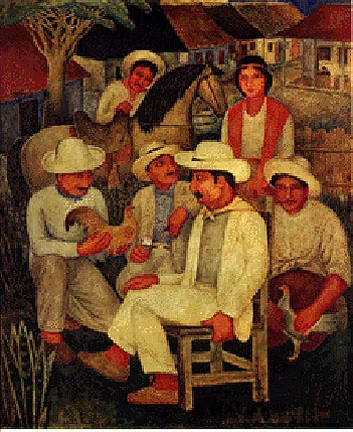
The May Cross Altars made in rural areas exhibit different characteristics than those in urban areas. In rural areas the peasant, regardless of skin color, took ownership of this festival, hence the great roots it enjoyed. The Cuban peasants made fundamental transformations regarding the decoration of the altar and the songs.