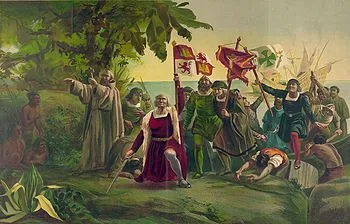
It was not until the year 1512, the date on which the landings of the Spanish colonizers in eastern Cuba took place, despite the fact that Cuba had been discovered in 1492 by Christopher Columbus when he made his first voyage. The Cuban aborigines were forced to work as slaves, in the search for gold and silver.
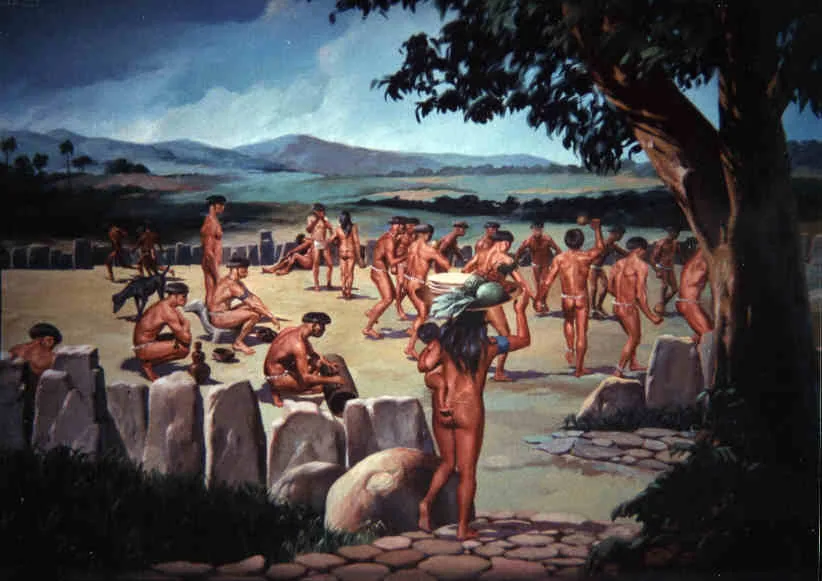
The areitos were considered patterns of superstition and savagery, hence in the first years of the conquest they were prohibited by the Hispanics, through one of the laws of Burgos, exactly on November 27, 1512. The Spanish genocide was used in the human aspect and also in the cultural aspect, since Spain needed to demolish all native expressions, in order to apply both its domination, its company, and its theatrical images. Therefore, in the Cuban archipelago, a stage of artistic underdevelopment emerged.
In a short period of time, the indigenous communities disappeared as a result of the mistreatment and epidemics they suffered. The disappearance of the aborigines resulted in the areitos also succumbing, hence we do not find in them the elements that define the theater that we currently know as Cuban.
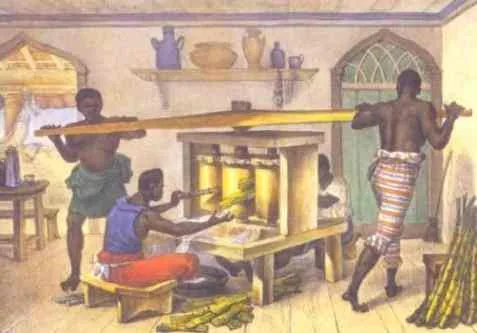
At the end of this five-year period, the massive introduction of Africans began, brought as slaves, to replace the native Cubans.
The minutes of the Town Councils constitute valuable sources from which we have been able to extract information. Through them the existence of literary manifestations has reached us to this day; since they refer to certain individuals to whom payments are made for the preparation of performances presented in religious festivities that took place in the various towns. Among the names of the subjects in charge of making these pieces we find Pedro de Santiago, Pedro de Castilla, Juan Pérez de Bargas, Francisco Mojica, Jorge Ortiz and Juan Bautista Siliceo.
The first theatrical performance of a Cuban play was carried out, with the play titled The good guys in the sky and the bad guys on the ground. As well as the existence in 1588 of a theater company.
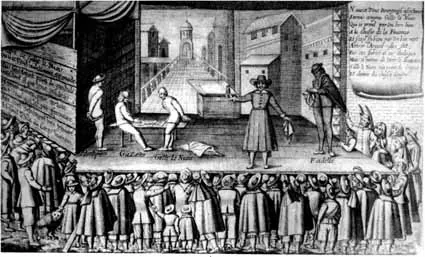
During this time, several festivities, both religious and secular, took place, in which the antecedents of Cuban theater are found. Among the first we can mention the Corpus Christi festival, one of the most important, and the Autos Sacramentales. Three Kings' Day was another of the celebrations that played a leading role in this century within the field of Cuban theater.
The Cuban theater of the 16th century was represented by modest dances, inventions, cars, hors d'oeuvres, farces, car parties, games, and good works; that were made, being the foundations of the evolution and development that later gave rise to Cuban theater.
We can affirm that the development of Cuban theater is based on modest dances, cars, games and others already mentioned; Well, it is nothing more than the transplant of European art to new lands.
In the 16th century, the Christian festivities of Corpus Christi served as the context for the appearance of the first scenic expressions on the Island. Information scattered in the Chapter Acts gives an account of certain subjects among the colonizing hosts who are in charge of organizing dances, inventions, sacramental acts, hors d'oeuvres, farces and comedies.