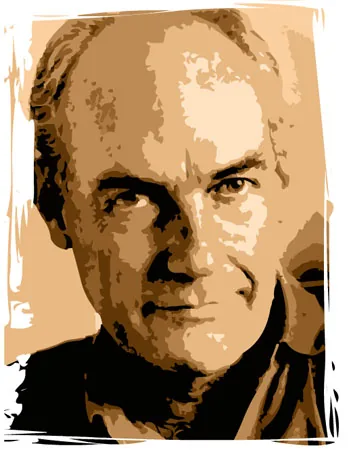
José Ángel Buesa has been the most populist of the Cuban neo-romantics, admired in his time, even beyond our borders, critics have almost unanimously accused him of creating an art of commercial zeal in his efforts or perhaps natural massification impulse; However, pieces of his authorship still populate the notebooks and daydreams of Cuban adolescents and young women, as an indelible mark of Buesa's passage through our culture and perspective of the poetic fact, sometimes ossified and narrow in his judgments.
Some have even described the bard as a phenomenon of mass communication, in his ability to capture feelings of shared roots in prefabricated molds that can easily be anchored in popular taste, especially with regard to the ups and downs of love, which as a good neo-romantic artist captures in its diversity of zones and nuances, with a strong dramatic component that linked perfectly with the sensitivity to use.
Buesa was born in the province of Villa Clara and from a young age he was interested in poetry and also theater and the radio universe, for which he wrote novel scripts, based on similar premises as his lyrical works. He was one of the representatives of neo-romanticism who had the most influence on his contemporaries, especially in the context of the city's petite bourgeoisie, who identified with his aesthetics and paid quite a bit of worship to his works.
Among his youthful works are “The Fugue of the Hours,” 1932; “Babel”, 1936 and “Canto final”, 1938, in which his neo-romantic inclination can already be seen but in poems modeled with a certain desire for effect, which incur in the reiteration of words and motives to please a certain audience; However, some successes can be seen in terms of the ability to forge poetic images and remnants of a lyrical gift that did not aspire to higher endeavors.
In the following decade he would publish, in 1943, “Death Daily” and “Oasis” – this last notebook, according to Virgilio López Lemus, was published 14 times until 1962, which shows the enthusiastic reception of his work by the general public, not only and even to a lesser extent the habitual poetry consumer; also “Odes for victory”, 1943; “Songs of Adam”, 1947 and “Lamentations of Proteus”, 1947, the latter one of his highest quality pieces and which departs a little from the chord he had followed until now.
These were followed by another series of notebooks without really distinctive elements: “Joy of Proteus”, 1948; “New oasis”, 1949; “Poems in the sand”, 1949, “Poet in love” (consisting of two parts that he would publish in 1955 and 1960) and two anthologies that collect his passage through poetry also appear: “Double anthology”, 1952 and “His best poems”, 1954, which is also an indication of the success of his works.
The poet left the Island in 1960, but he still published three collections of poems since the triumph of the Revolution, the aforementioned second part of “Poet in Love” and the titles “Prohibited Poems” and “Secret Book”, from 1959 and 1960, respectively. Beyond the ease, the common places, the thematic and lexical recurrence, the charm of his pieces has transcended into a romanticism of youth that I relive at times.