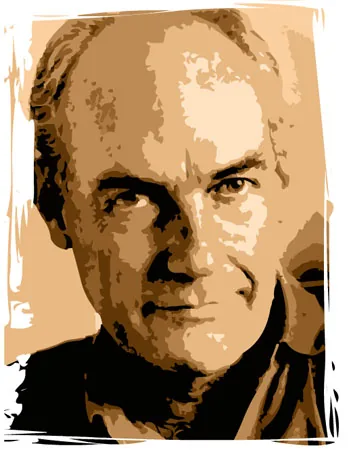
Raúl Gómez García is one of many men in whom words have played a subordinate function with respect to action; From a young age he cultivated poetic writing without great pretensions but to capture his emotional experience of the world in the neo-romantic register common to his generation; but he chose to make the Revolution and used writing to express ideas that also had this purpose.
He studied Law and Pedagogy at the University of Havana and became linked to the Orthodox Party and the figure of Fidel Castro, a process during which he would promote his revolutionary convictions and polish his poetic instrument, under the influence of Martí's ideology and aesthetics, which is the most directly intelligible lyrical influence in his works.
After the coup d'état carried out by Fulgencio Batista on March 10, 1952, he wrote the text “Revolution without Youth”, in which the core ideas that would guide his creative actions can already be seen, not restricted to the realm of the poetic but predominantly in the transformative action on his immediate reality, weighed down by surrenderism, political corruption and already by the bloody overtones of criminal repression.
Known as the poet of Moncada, he wrote his manifesto and participated in the assault on the military barracks with the aim of unleashing the armed struggle, based on the indignation that the de facto government established by Batista provoked in the people. He died, not as a result of combat wounds but of the violent torture he suffered as a prisoner, beaten to death for his persistence in silence.
The words of Basilia Papastamatiu serve to illustrate his legacy, also extended to a whole host of young people who gave their lives to the revolutionary cause, among whom are Frank País, the brothers Luis and Sergio Saíz and other names:
“Because these young people understood that they could not face a time like that with words alone, and they decided on the language of violent gesture, of direct, corporal action, hard and risky language, through whose use not a few even had to subscribe with their own death to the text they were writing, which was the text of the revolution.”
His lyrical work could undoubtedly have been vaster and more profound if he had not died at such a young age, impregnated with the neo-romanticism of his generation, in addition to Martí's influence, a certain imprint of Casal regarding the spiritualization of love can be seen.. Part of his poems were unfortunately lost as a result of the repression that his family would also suffer after the vile assassination. Those that survived were compiled and released to the public in 1971 by Basilia Papastamatiu, some of which have been well received regardless of Raúl's revolutionary merits, for example the one titled “Paradox”:
“That dreamed kiss was lost in the thicket
That golden dream changed into tenuous calm
That worthy passion that gave me life
Who welcomes between some verses for being feverish and for being holy
It lies almost forgotten in the corner withered
And of all his fury only one wound remains.
All those eyes that saw our desires
Thirsty throbbing in the fibers of the soul
They no longer tend to watch us go by with time
The hidden passions of supreme nostalgia
And the lips that spoke of our dead love
They already talk about other things caustically and happily.
Everything is over it seems... There is a calm as
That drowns in its silence your eternal woes...
It's been months since my verse has come out of my pen
The worthy epilogue that (illegible) and overwhelms
From this novel of ours it seems that it already points...
Today I have seen it, I have seen it and I do not understand
How even though everything seems already over
He looked at me eloquently with those black eyes...
As if naively appreciating his ignoble kisses...
Maybe the mouth that crashes on his lips
Not even in this death of mine did he learn to possess them?