
The first textual records that reflect the intention to record the past events of the Island date from the 18th century, the earlier ones constituting a gap in that sense, since no work created during that time has survived, even so it is not reasonable to assume that there were no attempts in the matter.
The first person in literature to take an interest in recounting the past was the priest Onofre de Fonseca (1648 – 1710), author of “History of the miraculous apparition of Our Lady of Charity of El Cobre”, from 1703. The status of antecedent of historical-literary writing that is granted to this work is not given by the subject, of religious and popular origin, nor by the treatment that is given to it as an incontrovertible fact; but by the use of sources as evidentiary elements and the implicit vocation to rescue the past and give substance to tradition.
Later bibliographies reflect the existence of texts that were never found, leaving only their titles and, in some cases, their authors. Among these is "Letter and Account of the Island of Cuba and its Particularities, with three histories of the Governors of Havana from 1549 to 1725, of the Bishops until 1705, and of the Viceroys of Mexico," by Ambrosio de Zayas Bazán (1666–1748). The same occurred with other works; it is worth mentioning the lost texts of "History of the Literary University of San Gerónimo of the Island of Cuba," by the priest José Manuel Mayorga, and "News of the Writers of the Island of Cuba," whose titles are suggestive for reconstructing the literary landscape of the period.
The figure of Bishop Pedro Agustín Morell de Santa Cruz (1694 – 1768) stands out in the dawn of historiography, to which he bequeathed some significant contributions. His most important work, with the consensus of many specialists, is “Apostolic, Topographical, Historical and Statistical Visit of all the towns of Nicaragua and Costa Rica”, from 1751. In 1746 he had written “Account of the attempts of the English in America” and in 1749, “Historical Account of the early bishops and governors of Cuba”, which implies a relatively broad spectrum of topics.
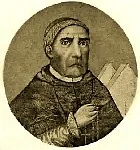 As part of his episcopal duties, he also wrote texts that bear witness to events and situations reflecting the stark reality of colonial life. The “Pastoral Letter of the Most Illustrious Bishop of Cuba to his Diocese on the Occasion of the Earthquake that Occurred in the City of Santiago and Adjacent Places,” from 1766, contains revealing paragraphs:
“The powerful suck the blood of the poor, fatten themselves with the sweat of their brow, grow strong with their wages, break the trust in contracts, exceed deadlines, wriggle out exorbitant usury, and spare nothing to quench their infamous thirst for gold, and they achieve all this with impunity by maintaining lifelong lawsuits from which their grandchildren never emerge. The poor, beset by such tyrannies, give themselves over to idleness, and work only to overcome their needs through theft, robbery, criminal acts, and false oaths.”
The works in general lack the analytical function indispensable to historical rigor, and are laden with details that reveal the author's difficulty in discerning between the essential and the incidental in describing the events; the style is also not refined, but the intention to clearly present the events is evident. However, the simple desire to chronicle the island's history, sometimes with a perspective closer to a chronicle, places him among the pioneers of the genre in the island context.



