In several urban and rural areas of eastern Cuba, from Camagüey to Guantánamo, a ceremony called "Espiritismo de Cordón" is currently practiced, which has its origins in the Areíto of the Cuban indigenous people.
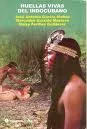
The book “Living Footprints of the Indo-Cuban” by José Antonio García Molina, Mercedes Garrido Mazorra, and Daisy Fariñas Gutiérrez demonstrates that the indigenous legacy in Cuba, embodied in the Areíto, is preserved today and is a spiritual heritage of modern Cubans. It explains that during the five stages of the ceremony, which is led by a guide, the participants, holding hands, form a circle in which they place those suffering from illnesses in the center to learn about their ailments and invoke the ancestors for their healing.
The material also includes 73 musical samples printed for the first time after being recorded.
 The discovery of the origin of the "Espiritismo de Cordón" ceremony, previously unknown even to the prestigious Cuban ethnologist Fernando Ortiz (who studied it during 1948-50 without determining its origin), constitutes a contribution to the studies of Cuban cultural identity, since until now there was no evidence of the existence of any strong expression of the Cuban indigenous spiritual culture in the current population.