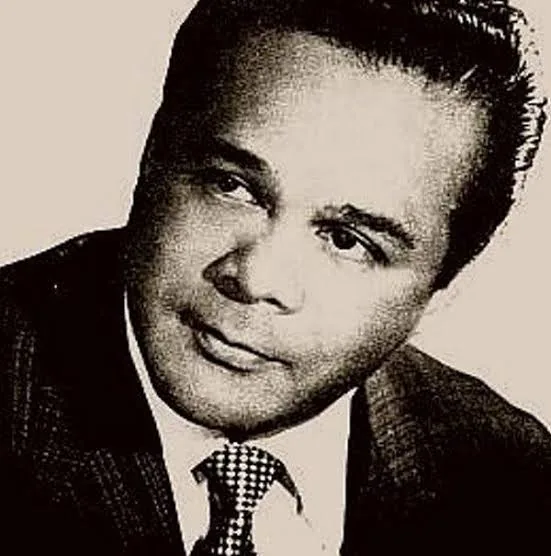
Adolfo José Guzmán González was a composer and pianist. He was born in Havana on May 13, 1920. He studied piano with Alberto Falcón, completing his studies in 1936; later he was a student of harmony, instrumentation, and composition with Bernardo Moncada.
His artistic career began as an accompanying pianist for the singer Floro Acosta, with whom he formed the duo Ideal. In 1938, he joined Los Románticos Gauchos as a pianist; in 1941, he moved to RHC Cadena Azul, where he accompanied the Argentine singer Alberto Gómez, with whom he traveled to Santo Domingo, Dominican Republic, in 1944.
That same year, Adolfo Guzmán accompanied singers Libertad Lamarque, Amanda Ledesma, and Hugo del Carril on the piano. In 1943, he joined the radio station Mil Diez as musical director. From 1945 to 1946, he directed the orchestras of the Zombie Club, the Montmartre cabaret, and the theaters of the América (Ave. de Italia No. 253, Centro Habana, Havana City), the Fausto (Prado and Colón, Old Havana, Havana City), among others.
In 1948, he inaugurated the Warner Theater with his own orchestra, where he served as musical director and made the orchestrations for Ignacio Villa (Bola de Nieve), and the Mexican singers Jorge Negrete and Tito Guízar.
He is a founder of television, in the 1950s he alternated his responsibilities as musical director in that medium, with attention to live work, one of the most relevant points of which was the direction of the Montmartre cabaret orchestra.
Between 1967 and 1968, he directed the quartet Los Modernistas. He also conducted the Riverside Orchestra. He was the director of the Musical Theatre, where he directed Las vacas gordas by Abelardo Estorino and El apartamento by Jesús Gregorio in 1968; El vergonzoso en Palacio by Tirso de Molina and Pato Macho by Ignacio Gutiérrez in 1969.
He toured several European countries in 1966. He participated in Expo '67 in Canada; he traveled to Poland in 1969 to participate in the Cuban Television Day.
Adolfo Guzmán's song lyrics stand out for their time. They are aesthetic, poetic, and delicate. They defy the monotony of the refrain. The negative atmosphere of the era does not hinder the development of his songwriting techniques. According to composer and pianist Hilario González: "What stands out in Guzmán's music is how he transforms the kind of filin melody that emanates from great American songs—primarily musical comedies—into something directly related to traditional Cuban song. That is to say, starting from the root of the romantic song, he connects with the great Cuban trova, with the music of composers like Lecuona and Sánchez de Fuentes. However, despite this root, 'No puedo ser feliz' (I Can't Be Happy), to cite just one example, is closer to Sánchez de Fuentes's 'Corazón' (Heart) than to any American song. Adolfo has a very advanced command of harmony. He is a first-rate songwriter because of his melodic gift and the harmonic work he imbues his songs with." Furthermore, he worked on the orchestration superbly. His instrumentation was superior. That's why his songs sound like concert music.
Among his vast body of work, the ballet Maleficio in 1950 stands out. His most significant songs include: Without Knowing Why, 1938; Moon of the Congo, Melancholy, 1940; Don't Deceive Me, Why Did You Make Me Love Her?, Your Voice, 1943; Come Back, 1944; It's Raining, 1945; Love Knows Best, 1948; Son, I Can't Be Happy, 1954; Prophecy, I Will Be Happy When You Love Me, Symbol of Love, Come, Come for a Moment, 1955; Acapulco, Land of God, When the Stars Sing, Antillean Dream, My Heart and I, Brazilian Night, Living Without You Is Suffering, 1956; Love, Divine Grace, Tonight I Found You, It's Not Possible to Love So Much, Little Thing, Always Christmas, 1957; Thus, Seeing You from Afar, Free from Sin, You and the Wind, 1958; Like Never Before, The Time Machine and Raining, 1960; Lullaby, It's So Easy to Lie, To Be in Love, 1962; I'll Wait for You in Eternity, 1963; At Last, Love, Together You and I, If You Ever Leave, 1964; Love, That's Love, When the Hours Pass, Magic of Love, I Bring You a Word, 1965; It's Natural, My Love, 1967; Tell Me the Reason, Thank You, Thank You My Love, Oblivion, Forget Yesterday, 1970; Sing, Laugh, Dream, I Have Lost Faith, 1971.
Among his compositions of Blue Song we can mention: Melancholy, 1940; Blue Kiss, 1944; in Hymn: Che Guevara, beloved teacher, 1967; Freedom or death; in Incidental Music: Captain Storm, The Insurgents, The Three Musketeers, The Vikings, Ulysses; in Piano and Orchestra: Sadness, Concerto in A minor, Concerto in D flat and finally in Waltz-song: Memory of yesterday, 1938; Our idyll, 1956.
Until his death on July 30, 1976, Adolfo Guzmán worked as an orchestra conductor in television, theaters and musical shows.