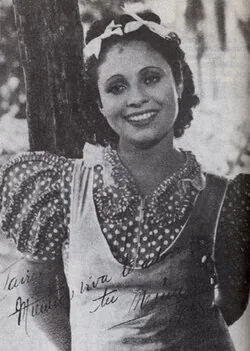
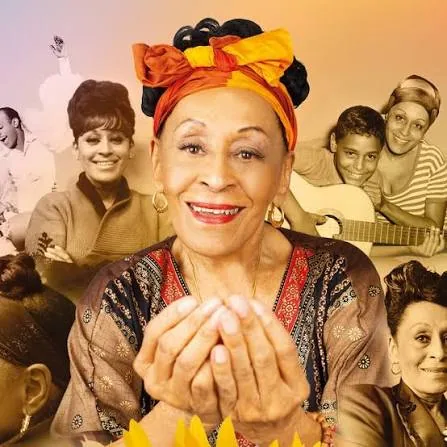
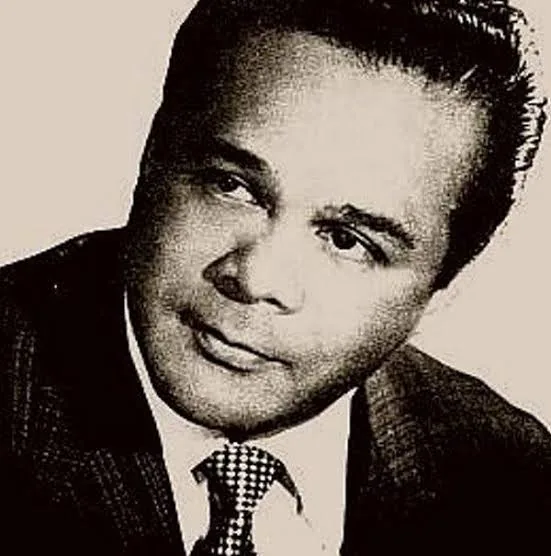
José Antonio Méndez; Cuban guitarist, singer and composer, was born in Havana on June 21, 1927. At only 12 years old he performed and won first prize at the Supreme Court of Art.
He began his guitar and composition studies in the 1940s. While a high school student, his first piece premiered at a party at the Havana Institute. Later, he began performing on radio station Mil Diez. He was the organizer of the musical group Loquibambia.
In 1946, he composed "Por mi ceguedad" (Because of My Blindness), "Soy tan feliz" (I'm So Happy), and "Novia mía" (My Sweetheart); and in 1947, "La gloria eres tú" (You Are Glory), which was popularized by Toña la Negra and included by Pedro Infante in the Mexican film Dos tipos de cuidado (Two Types of Care). In Mexico, he performed successfully in nightclubs and on the radio, leaving behind his voice and songs recorded on five long-playing records.
José Antonio Méndez was part of the core of the Cuban Feeling movement; a great artist of Cuban music, extremely simple.
In 1949, at the invitation of Cuban singer Pepe Reyes, he went to Mexico in search of better opportunities to earn a living through his art. He returned to Cuba after the triumph of the Revolution, and a few years later was elected president of the Cuban Society of Musical Authors.
For several generations, his work has been taken up by a wide variety of performers such as Elena Burke, Moraima Secada, Orlando Vallejo, Vicentico Valdés, Fernando Álvarez, Pacho Alonso, Roberto Sánchez, Pablo Milanés, Omara Portuondo, Lucho Gatica, José José, Manzanero.
Among his most memorable songs are:
• La gloria eres tú
(You Are My Glory) • Novia mía (My Sweetheart), Quiéreme y verás (Love Me and You'll See
) • Ayer la vi llorar (
Yesterday I Saw Her Cry
) • Si me comprendieras
(If You Understood Me) • Sufre más (Suffer More ) •
Soy tan feliz (I'm So Happy
)
• Me
faltabas tú (I Missed You) • Decídete (Make Up Your Mind) •
Tú mi adoración (You Are My Adoration) • Por nuestra cobardía (Because of Our Cowardice) • Mi mejor canción (My Best Song)
• Ese sentimiento
que se llama amor (That Feeling Called Love). He died on June 10, 1989, in a fatal car accident. Two nights earlier, he had gifted some of his memorable creations at the gala dedicated to the Cuban Feeling movement at the Third International Boleros de Oro Festival, held in Havana. His boleros and his songs, as always, continued to hold the world together. His remains rest in his hometown.