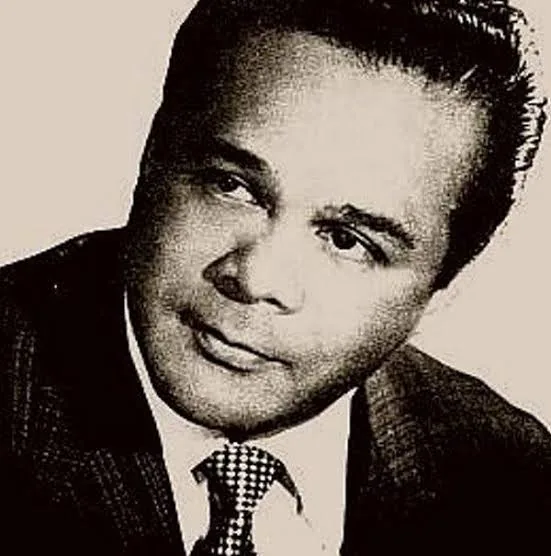
The Cuban musical group Los Dadas was formed in 1966. It was an instrumental quartet that emerged within the framework of the Revolutionary Armed Forces of Cuba. It was under the tutelage of bassist, singer, and composer Raúl Pastora, who was both its director and its creator.
The group initially consisted of bass, guitar, accordion, and congas. Later, other instruments such as the vibraphone and drums were added, along with a singer. The first singer for Los Dadas was Dr. Manuel Calviño, now a renowned psychologist in Cuban media. Another member was keyboardist and arranger Alfredo Arias, who assisted Pastora in founding the group.
The first performances that Los Dadas made outside of the Military Unit to which they belonged took place at the Amateur Festivals of the Ministry of the Revolutionary Armed Forces, in which they invariably obtained first place.
In 1968, the group left the army and began performing at cultural centers, theaters, and private parties as an amateur band. In 1969, Los Dadas joined the National Center for Artistic Contracts after being evaluated as professionals by a specialized jury, receiving the highest rating awarded at the time.
In 1970, they toured throughout Cuba, quickly becoming a favorite with audiences. They became one of the most popular musical groups of the time, which led to their selection as part of the delegation to the Varadero 70 International Festival, following a large national survey. At the festival, they shared the stage with renowned Cuban and international pop/rock artists and groups, including Los Bravos, Los Mustangs, Rita Pavone, Eva Piralova, Karel Gott, and Sergio Endrigo, among others.
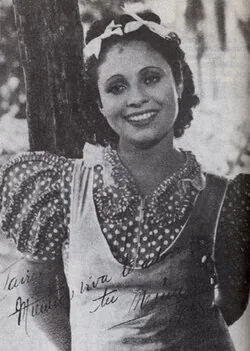
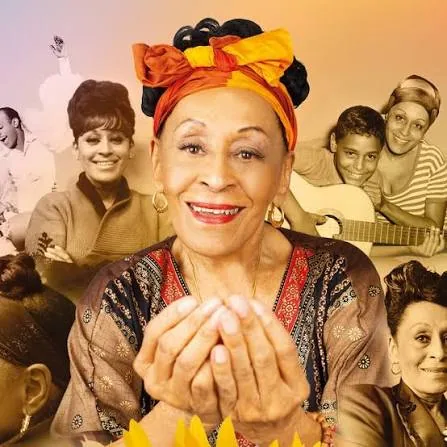
During these years, Los Dadas became the backing band for the duo Mirtha and Raúl, with whom they toured nationally and performed on television programs with high viewership, including: Buenas Tardes, Pantalla mágica, De repente en TV, Saludos amigos and De Viernes a Viernes.
Their first recording was also as accompanists for the duo Mirtha and Raúl, at the Empresa de Grabaciones y Ediciones Musicales (EGREM) (3rd Street No. 1008 between 10th and 12th, Miramar, Havana City). In the mid-1970s, they were given the opportunity to begin recording their first full-length album, but unfortunately, they only managed to record four tracks. The group's lead singer was Arturo Aruca, and it was during this period that Pedro Luis Ferrer joined as a singer.
Los Dadas performed at the Creator Festival, at the World Festival of Youth and Students held in 1978 and also at the “Adolfo Guzmán” Cuban music competition.
In 1979, brass instruments were added to the group's instrumental lineup. Los Dadas then boasted instrumentalists of the caliber of Hugo Morejon, Rogelio Pardo (Machito), Frank Padrón, Tirso Roches, Edilio Caridad Montero, and Pedro Borcela (Guapacha) on congas.
In the 1980s, Raúl Pastora became the sound engineer and representative of the band; the group hardly performed in the country due to the numerous commitments they had abroad.
The arrangements of the songs performed by Los Dadas showcased a fusion of musical genres, ranging from symphonic to popular, from genuine rock to traditional trova. They also incorporated distinctly Cuban genres such as bolero, rumba, and guaracha.
Songs such as “Siempre”, “Démonos la mano con la flor”, “Los años verdes”, “No te hallara mi canción”, “La soga”, “Siempre”, were performed by this brilliant Cuban musical group and were to the delight and enjoyment of the public.
Important figures in Cuban music passed through Los Dadas, such as Juan Sebastian Monte (El Chano), who played lead guitar during the group's heyday. Jorgito Vázquez, the drummer, was replaced by Héctor Barrera (Ringo), who went on to work with Los Barba. The aforementioned Arturo Aruca joined the group as a singer after it turned professional. José A. Oliva played rhythm guitar and later keyboards. Other members included Pedro Melo as lead guitarist, Mikel Pourcel, and Lázaro Morua as a singer, among others.
Los Dadas were pioneers of the Rock movement in the 1960s, as well as the first within the Nueva Trova movement to fuse Rock with Trova; this was largely due to the presence in the group of Pedro Luís Ferrer and Mikel Porcell, in addition to the first-rate orchestrations that were mostly due to Alfredo Arias, the group's keyboardist at that time.
Los Dadas were characterized by their unique and singular style, and their high quality. Therefore, regardless of their disbandment, they have transcended the history of Cuban popular music of the second half of the 20th century. They constitute one of the most important Cuban musical groups of all time.