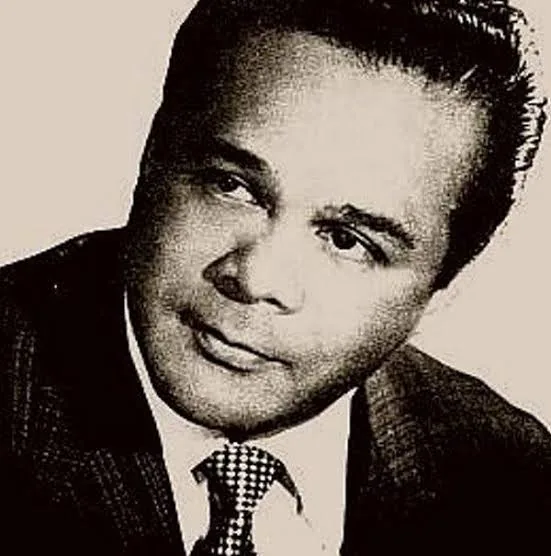
The first group, created in 1952 by the musician Pacho Alonso, was called Pacho Alonso y sus Modernistas and was based in Santiago de Cuba. This group was restructured years later, and despite the large number of orchestras established in the capital, Pacho took on the challenge of settling in Havana and changing the name of his group to Pacho Alonso y sus Bocucos. Later, he created another group: Pacho Alonso y sus Pachucos.
Pacho Alonso and his Bocucos, as a popular orchestra, already had a well-defined musical style, based, according to Pacho himself, on a mixture of guapacha and different touches of the French Tumba of Haitian origin.
From 1961 onwards, Pacho Alonso and his Bocucos embarked on a remarkable musical career, performing at carnivals in several Cuban provinces and also appearing on the stages of major cabarets such as the Hotel Habana Libre (Calle L, corner of 23rd Street, Vedado, Plaza de la Revolución, Havana), the Tropicana (Calle 72 No. 4504, Marianao, Havana), and the Havana Rivera (Paseo and Malecón, Vedado, Plaza de la Revolución, Havana). Pacho Alonso's captivating presence was also highly sought after for various television programs during those years.
Pacho Alonso recorded his second LP for RCA Victor, where he included his Bocucos alternating with the orchestras of Bebo Valdés and Juanito Márquez, and where he sang great hits of his career such as the guaracha Que me digan feo, the humorous rhythm A cualquiera se le muere tío, by Enrique Bonne, and the unexpected son montuno by Martha Valdés entitled, Sorpresa de harina con boniato.
In 1967, Pacho Alonso decided to form a new group called Pacho Alonso y sus Pachucos, characterized by a more contemporary sound and a new repertoire. The orchestra Pacho Alonso y sus Pachucos toured the Soviet Union, Czechoslovakia, Italy, France, Spain, and Panama.
The new group, Pacho Alonso y sus Pachucos, demonstrated great versatility and outstanding creativity from the very beginning. The Bonne-Alonso duo succeeded in popularizing new rhythms, such as the Simalé and UPA UPA, although never achieving the extraordinary success of Pilón.
In June 1969, Pacho and his musicians were invited for the first time to the Barcelona International Trade Fair in Spain. On the two occasions that Pacho and his group visited the Barcelona International Trade Fair, in addition to their performances in the Cuban Pavilion, they were hired to perform at other venues such as the Larraine Club, Tres Molinos Restaurant, Tropicana Night Club, and others. They performed alongside well-known Spanish groups at that time in Cuba, such as Los Fórmula V, Los Javaloyas, Los Diablos, and Los Payos, as well as famous singers like Rafael, the Argentinian Luis Aguilé, and the Mexican Armando Manzanero.
During the seventies, Pacho Alonso and his Pachucos traveled through several countries in America and Europe and at the end of the seventies Pacho Alonso's son, Pachito, joined the orchestra. At that time, he was very young but already an outstanding pianist and arranger, to whom Pacho eventually handed over the leadership of the band, quite some time before his sudden death.
In 1978, Pacho Alonso and his Pachuchos traveled again to Spain, where they performed with their usual success in Zaragoza, Barcelona, La Coruña, Madrid, Aragón, Huelva and Llogreat.
During the last years of the great Cuban musician Pacho Alonso's life, his orchestra performed in nearly every cabaret, restaurant, and hotel in Havana. The city's most important venues featured Pacho Alonso and his Pachucos on their billboards, dance floors, or stages. The orchestra also provided entertainment for years at Santiago de Cuba's carnivals, always eliciting rapturous admiration.
The new Upa-Upa rhythm popularized by Pacho and his Pachuchos, motivated many dancers within the framework of the carnival festivities of Havana.