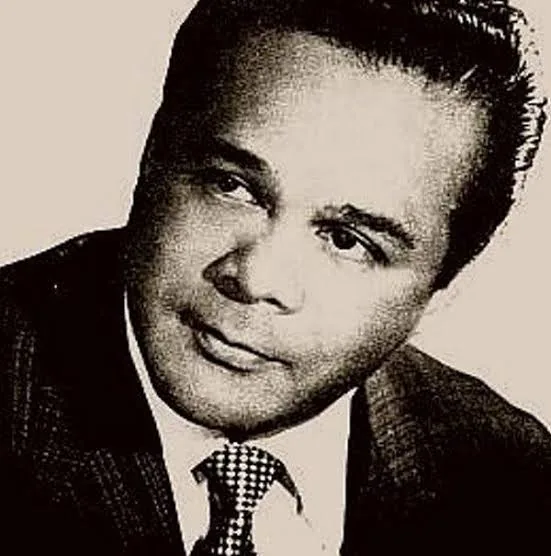
Juan Formell, Cuban composer, orchestrator, and double bassist, was born in Havana on August 2, 1942. He received his initial musical training from his father, Francisco Formell, and later continued his studies independently. His development as a composer and bass guitarist was guided by prestigious Cuban musicians such as Félix Guerrero, Rafael Somavilla, Armando Romeu, Antonio Taño, and Orestes Urfé.
In 1959 he began working as a double bass player in the National Revolutionary Police Band and later played with the groups of Peruchín, Rubalcaba and the Cabaret Caribe orchestra, until in 1968 he joined Elio Revé's Charanga.
In 1969 Juan Formell left Elio Revé's Charanga to found his own group: Los Van Van, with which he achieved great public acceptance, both inside and outside of Cuba.
The Los Van Van Orchestra has featured excellent musicians such as César "Pupy" Pedroso and José Luis "Changuito" Quintana, a duo that notably contributed to shaping the Songo rhythm, a variant of Son originated by Formell. In 1981, he added trombones to his charanga to strengthen the orchestra's middle register.
From this period with Los Van Van, which extends to the present day, we find many of their most famous creations such as Te traigo, Chirrín chirrán, Llegué, llegué, Que no, que no, El baile del buey cansao, Por encima del nivel, La Habana no aguanta más, Anda ven y muévete, Artesanos del espacio, La titimanía, El negro no tiene ná, among many others.
With Los Van Van, Juan Formell has performed successfully both in Cuba and on various stages around the world. This great Cuban musician has also been hailed as a musical chronicler for his prolific work as a composer.
Formell has maintained his creative work within the realm of song and has set to music poems by Nicolás Guillén (Cuando yo vine a este mundo belonging to the series Mi son entero); he has written music for the theater (La barbacoa, directed by Abraham Rodríguez, 1984 and Vivir en Santa Fe by the playwright Alberto Pedro, 1986); for film (Los pájaros tirándole a la escopeta by the director Jesús Díaz, 1984); and television (La rueda de casino by José Milián, 1992).
His creations and artistic results with his orchestra have become models for other musical groups in Cuba and abroad.
Juan Formell has recorded numerous albums with EGREM and other record labels. In 1999, he won a Grammy Award for his CD "Llegó... Van Van" (Van Van is here).
Among the awards given to this important Cuban musician are: the Félix Varela Order of the First Class, 2002, by agreement of the Council of State, and in March 2010 he received an Honorary Doctorate from the Higher Institute of Art (Calle 120 No. 1110 e/ 9na y 13, Playa. Havana City. Cuba) in recognition of his contributions to Cuban culture, and in particular for his work leading the orchestra of popular dance music in Cuba, Los Van Van.
Discography: Los Van Van vol. I (1969), Los Van Van vol. II (1974), Los Van Van vol. III (1974), Los Van Van vol. IV (1976), Los Van Van vol. V (1979), Los Van Van vol. VI (1980), Báilalo eh! ah! (1982), Qué pista (1983), Anda, ven y muévete (1984), 25 años... y seguimos ahí, vol. I (compilation, 1994), La Habana sí (1985), Eso que anda (1986), La titimanía (1987), Songo (1988), El negro no tiene na' (1988), Rico son (1989), Aquí... el que baila gana (1990), Esto está bueno (compilation, 1991), Bailando mojao (compilation 1993), Azúcar (1993), Lo último en vivo (1994), ¡Ay Dios, ampárame! (1996), Llegó Van Van (2000), En el malecón de La Habana, Unicornio, Cuba (2002), Chapeando, Unicornio, Cuba (2004).