Juan José Sicre y Vélez was born in Matanzas, on December 19, 1898. His first art studies were carried out in Havana, at the Villate school, which Aurelio Melero directed at that time; and later at the Academy of San Alejandro. He was awarded a scholarship that allowed him to study in Spain, at the prestigious San Fernando Academy in Madrid. There he had Miguel Blay as a teacher and he was in contact with other Spanish artists who had a positive influence on his work.
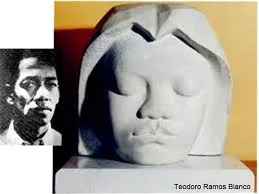
Some of his best-made first pieces date from this stage, such as the bust of the Spanish writer José Zorrilla, as well as the violinist Bonilla and other well-known figures of the time: Fray Marsal and the painter Bencomo. He spent a few days in France and later lived in Italy, in Florence. There he continued creating, under the Renaissance inspiration that still lingered in that city. From the Italian period are the sculptural pieces Statue of a Woman, Bohemian, The Madwoman of the Vatican, Dianela, Bambina and The Seated Man, among others.
Before leaving the peninsula, he also conceived Cabeza de Martí, a work for which he would obtain high recognition inside and outside of Cuba. He heads once again to France, where he would continue creating and interacting with the artistic currents of the moment. He sculpted the piece Descent, and others that were successfully exhibited in Paris. He continued creating in marble, plaster and bronze, materials that he carved with excellent results in terms of the harmony of the lines and the aesthetics in general.
In 1927 he returned to Cuba, where he had the opportunity to exhibit an important set of pieces, such as Fuente and Arrodillada, as well as some of those that have already been mentioned. Since that year he began to teach modeling classes at the San Alejandro Academy, a role he held for approximately 13 years, without leaving aside his essential mission as a creator.
In fact, the pieces Monument to the invading soldier, located in Mantua, date from this stage; the sculpture of Victor Hugo, in Vedado; an effigy of Eugenio María de Hostos, in Ciudad Trujillo, Dominican Republic; and that of General Narciso López, in Cárdenas. He was also the creator of reliefs dedicated to the deaths of Ignacio Agramonte, José Martí and Antonio Maceo, as well as others that still embellish significant pantheons of the Colón Cemetery.
For his artistic career he received numerous awards, especially those of posterity, since many of his works continue to stand out in various cities in the country. His Don Nicolás Estévez on the sidewalk of the Louvre, from 1937, as well as other sculptural pieces, including busts, plaques and reliefs, contributed to giving a face and visibility to important figures in Cuba and the world.