Evelia Cruz Pérez was born in Pinar del Río, in 1898, and died in 1975. Since she was a child, she showed her aesthetic sensitivity and her taste for the brush, a vocation that had decisive family support. In 1915 he entered the then known San Alejandro Academy of Drawing, Painting and Modeling, where he showed brilliant attitudes. She was even a student of the prominent painter Leopoldo Romañach, who appreciated Evelia Cruz's artistic qualities and predicted a successful career for her.
He did not limit himself to artistic creation but became interested in teaching and research, areas in which he also obtained encouraging results. She worked for a certain time as a painting professor at the Normal School of Teachers of Pinar del Río, a position she obtained by competitive examination, based on her excellent skills and the academic training she had acquired at the San Alejandro Academy, at a time when women were not fully considered as artists.
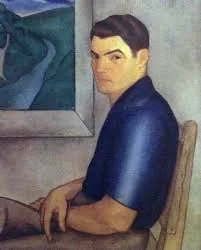
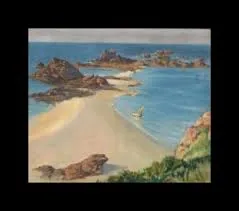
Her research in the field of art set an important precedent for later studies and her work stood out above all for its precise and elegant treatment of the human figure, although she is also the author of some notable landscapes, fundamentally inspired by the forest characteristics of Cuba. Still young, he won several awards and a scholarship that allowed him to visit the main European cities, a continent where he lived for approximately three years.
Upon returning to Cuba he continued his artistic and teaching work. On several occasions he participated in the exhibition halls organized annually by the Association of Painters and Sculptors of the Círculo de Bellas Artes of Havana; But he mainly opted for teaching, which would leave a good part of his creative talent in the shadows at this stage. As a teacher she achieved the prestige of being, along with Luisa Fernández Morrell, a precursor of the female gaze around landscapes, figures and events.
Years after the triumph of the Revolution, in 1963, he decided to emigrate to Puerto Rico. There he recovered his creative vein, exhibited valuable works and achieved, to a large extent, the recognition of the public and critics. However, he never abandoned his idiosyncrasy, the national tradition of which he would continue and promote in other lands, with undeniable historical ties with Cuba. In both countries, her work established an inspiring role for young plastic artists.