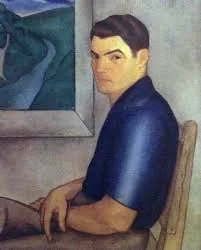
Gumersindo Barea y García was born in the city of Cárdenas, province of Matanzas, on December 17, 1901. At the age of 17 he enrolled in the San Alejandro Academy, where he already showed a special interest in watercolor painting. He later traveled to Spain and continued his artistic training at the San Fernando School of Fine Arts in Madrid, where he obtained a scholarship from the Spanish government that allowed him to graduate as a drawing and painting teacher in 1928.
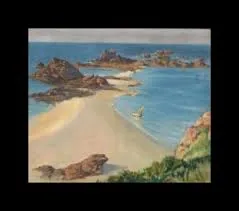
In Spain he had the opportunity to visit significant cities from a cultural point of view, such as Barcelona, Valencia, Asturias, Galicia and Andalusia; He visited museums and other sites of artistic and historical interest, which had a very positive influence on his work. The main area in which he displayed his art was as a watercolorist of seascapes; his pieces of this nature have striking colors and are impeccably executed.
It is worth highlighting his involvement in humanitarian causes, since in 1926, while in Spain, he supported the Cuban Embassy in raising funds to help the victims of the devastating hurricane that hit the Island that year. He did so through a successful exhibition, organized together with other artists, which allowed him to simultaneously disseminate his work and collaborate to solve the critical situation that was then experienced in Cuba.
In 1929 he returned to Havana, where he was appointed Honorary Auxiliary Professor of the Academy of San Alejandro, precisely in the specialty of watercolor. In 1936 he took up the position of Secretary - Delegate at the Elementary School of Plastic Arts attached to San Alejandro. In 1947, during a student excursion, he had the opportunity to visit Paris, thus complementing his knowledge of art.
Throughout his artistic career, Gumersindo Barea held several personal exhibitions and bequeathed a number of works of value to the history of Cuban art. Among these we can mention Amanecer, Rancho de Pescadores, Colando la nasa, Cielo y mar, Cayo Piedra, Sinfonía azul, Los boats, El uvero (set of marinas), La palmera, La vereda, Peñas Hicacos, La laguna, Rincón campesino, Los boats, Claro de luna, Platanal, La vereda, Palomera and Lejanías, among others. He also collaborated in the restoration of paintings of Cuban patriots, located in the National Capitol.