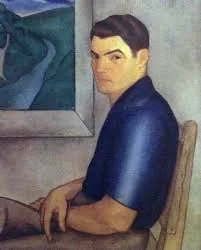
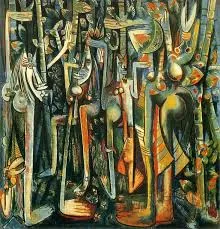
Víctor Manuel García Valdés, known simply as Víctor Manuel, has been one of the most important values in the history of Cuban Plastic Arts, still present as an inspiration in contemporary times. He managed to go beyond the barrier of academicism to delve into the essences of characters, natures and phenomena that have been captured - transmuted - with singular mastery in his works.
From a very young age he became interested in plastic arts and made his works known in prestigious intellectual and academic circles. He was a disciple of Romañach and was linked to Avance Magazine, as well as other artists who exhibited their pieces around this cultural project, which went beyond the literary in its desire to bring to Cuba and cultivate from Cuba the universal in terms of creation. He also frequently presented his pieces at the Association of Painters and Sculptors and at the Lyceum Society of Havana.
He had the opportunity to visit important art centers in Europe, particularly in France, Belgium and Spain, where he also came into contact with artists and currents that would significantly influence his later performance. He would be one of the most prominent representatives of the Cuban avant-garde, especially because he managed to link the national and the foreign without prejudices that would restrict his creative potential, and with high rates of artistic achievement.
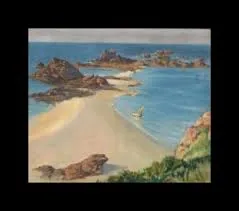
His series of tropical gypsies, especially the painting properly called Tropical Gypsy (1916), widely known by the Cuban public, perfectly expresses these identity values not only Cuban, but also those of Latin America and the Caribbean, by praising the feminine beauty of the region, which did not correspond exactly to European canons. Among his most notable pieces are also Landscape, Gray Landscape and Inner Life.
Like most of our most outstanding artists of the 20th century, he was a disciple - and later a professor - at the Academy of San Alejandro, where he has left an indelible mark with the virtuosity of his brush. He obtained awards in the Ministry of Education Salons of 1935 and 1938, as well as other well-deserved recognitions in the country and abroad, where he also constitutes a symbol of the pictorial universe of the Island.