Juan Emilio Hernández Giró was born on May 22, 1882, in Santiago de Cuba, and died on November 7, 1953, in Havana. He received his first painting classes from both his father, Rodolfo Hernández Soleliac, and from a French doctor, with knowledge of plastic arts, named Luis Oscar Marisy. At the age of 16, he enrolled in the Haiti Academy, where he perfected drawing techniques and began to think about big projects, before returning to his native Santiago de Cuba.
Once in Santiago, he began working on two works that would be the first of importance by this artist, due to the format and the attention to detail, these are El desembarco de Martí y Gómez and La muerte de Flor Crombet. As can be seen in the titles, he was subjugated by the themes of the recently concluded feat, on which he recreated other passages and topics such as The Battle of Caney, The Vision of Maceo, The Invasion of the West and The Fire of Bayamo, among others that responded to this inspiration.
At this stage of his life he received important support from Emilio Bacardi, later he traveled to Spain, where he lived for several years. There he continued to dedicate himself to artistic creation and studies related to it, he conceived not only paintings but drawings and sketches that allow us to approach the evolution of his art and the concerns inherent to it, beyond technical preciousness. He also had the opportunity to travel to England, Holland and Belgium, where he became intimate with other artists and expanded his worldview regarding art.
In 1924 he returned to Cuba, he was already a prestigious painter and had an arsenal of techniques that he would not only use in his works but would also allow him to embark on a career as a teacher at the San Alejandro School, where his mark still remains. Even far from the Island, the scope of reality that he was interested in capturing had not changed substantially; he was even the author of the 101 pen drawings that are part of the book History of Cuba in Images. He was not only interested in war and island history, as he had already created The Oath of Hernán Cortés and The First Municipal Mayor, among other pieces of this type.
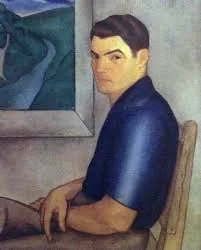
Another aspect of his work includes portraits, among which there are nearly 300, including the poet José María Heredia, René Doumic (Royal Academy of France) and Mademoiselle Jeanne Hatto, just to name a few. As for the religious theme, it was not lengthy, but we did find the painting of Nuestra Señora del Carmen and another painting in which diverse motifs are mixed, of a rather historical nature: The heroic ruins of the Church of Bayamo. Likewise, he was the author of Taita Pablo pouring Cuban coffee, an example of high-quality customs with a desire for transcendence. Without a doubt, an essential painter of our art.