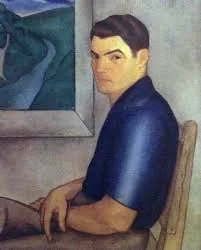
Armando García Menocal, one of the most famous Cuban painters, was born on July 8, 1868 and died on September 28, 1942; Most of his life was spent in his hometown, Havana. Before turning 18, he had already completed his studies at the San Alejandro Academy. He then traveled to Madrid, where he obtained several recognitions for his outstanding work, among them the Second Prize at the National Exhibition of Madrid, awarded for the piece Generosity Castellana.
Upon his return to Cuba he continued his work, already imbued with the main pictorial currents of Europe. His work Embarque de Colón by Bobadilla was expressly conceived for the Chicago Exposition of 1893. In the piece the Discoverer of America appeared chained, which the Spanish authorities opposed, but it was still exhibited without modifications at the Teatro Tacón in Havana. This constituted one of his first confrontations with colonial power, present in much of his work.
When the armed uprising of 1895 took place, Menocal joined the insurrection and even served as an assistant to Máximo Gómez, without ever abandoning his artistic vocation. His experiences allowed him to capture in his pieces a vivid panorama, not only of the war exploits, but also of the tragedy of the wounded and the hardest events, such as the death of Antonio Maceo, whose representation is preserved in the city museum, and he even obtained, in 1915, the gold medal at the California exhibition. Other pieces from this cut were The Battle of the Colosseum and The Invasion.
The distinguished painter also decorated some illustrious institutions in the city, such as the Presidential Palace and the University of Havana, works that date back to 1918. For the great study center he conceived the pieces Medicine, Fine Arts, Science, Thought, Law, Commerce and Astronomy, according to the main disciplines that were studied there. He was the cousin of Mario García Menocal, who was president of the Republic and was linked to these commissions, motivated above all by the value of Menocal's work.
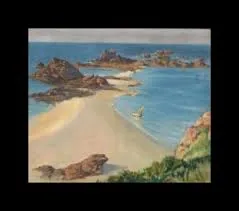
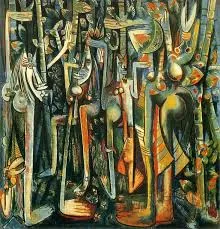
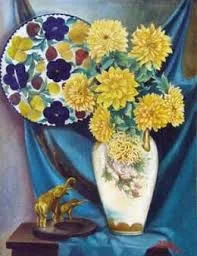
Likewise, he decorated a chateau owned by Lady Rosalía Abreu, located in the Palatino neighborhood. In addition to the historical subjects and the portraits he made, he conceived seascapes, still lifes and works of a mythological nature, with a fairly wide creative spectrum. He was, for several years, professor of the Landscape Department at the San Alejandro Academy. He constitutes one of the essential figures of Cuban painting of the transition between the 19th and 20th centuries, decidedly one of the main foundations of our art.