The plastic arts encompass a set of disciplines that have as their common denominator a visuality that can be called fixed - conventionally, since contemporary creation increasingly challenges theoretical reductionisms - associated with a physical object, whose value can reside in the artistic quality per se or be determined by a practical purpose, of use for an individual or a community, to which artistic features are added. Among its main manifestations we consider the following: painting, sculpture, ceramics, engraving, photography, architecture and graphic design, which emerged and differentiated in dissimilar historical-social contexts, but on a common heritage that interacts in culture.
In the history of the plastic arts of the Island, the signs of the native and the "imported" universes converge with the binomial of colonization and slavery, which implied the introduction of the Spanish aspect of European art (in turn influenced by the secular period in which the peninsula remained under Muslim rule) and African culture with its peculiar symbology and imagery. Its origins are given by objects of daily, ceremonial or cult use of the aborigines, mainly the Taínos, among which are tools, seats and vessels, worked in stone, wood or clay. At the dawn of plastic art, the magical-religious purpose was essential, which is why the cemíes - aboriginal idols - carved in stone or other materials, constitute the center of a belief system that had diverse expressions in the visual field.
With the Discovery of America, the arrival of the Spanish colonizers and the founding of the first towns, a fundamental transformation of the area of the Island began to take place. The military fortifications, the churches with their imagery, decorations and liturgical objects; as well as the civil constructions that would emerge a little later, provided the main impetus for the aforementioned artistic disciplines. The shield of the city of San Cristobal de la Habana and the statue that would later be known as "La Giraldilla", in the Castillo de la Fuerza, are among the first pieces where art appears as an end in itself, beyond the utilitarian; although these would also fulfill their function on a symbolic level, as a living representation of the city.
From this amalgam of elements, a truly Cuban worldview of the arts slowly began to crystallize, which was fundamentally reflected in architecture, essential for the expansion of cities and with them the so-called civilization; although this practically represented the extermination of the aborigines and their culture. The Creole, associated with the emergence of an incipient bourgeoisie as a social class, began to impose itself in Cuba, when the nation did not yet exist but the island was considered a Spanish overseas province. In the 18th century, the so-called Cuban Baroque style prevailed in architecture, which was not as abundant in decorations as the Spanish one, due to the characteristics of the stone that was worked at that time. The enlightened despotism that characterized the Spanish Crown at this time implied a significant boost to the arts and culture in general. The first theater on the Island, "El Coliseo", was built in Alameda de Paula, already inserted in this architectural style, and the churches that date from the period, such as the Havana Cathedral, have distinctive characteristics, particularly in cornices and columns.
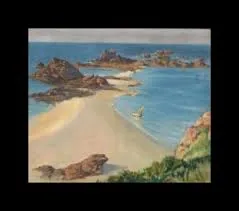
Cuban painting, with the cultural background already indicated, has its first exponent in Nicolás de la Escalera. In general terms, religious imagery, portraiture and, shortly after, the natural landscape of the Island, constituted the main topics during the first centuries of Hispanic colonization, an aspect that will be addressed in other sections. The founding of the Academy of San Alejandro, in 1818, represented a milestone in the evolution of this discipline. On the other hand, engraving techniques were fundamentally associated with the tobacco trade; The rings that were placed on the cigars and the containers or boxes, increasingly worked from an artistic point of view, constitute an important antecedent of advertising.
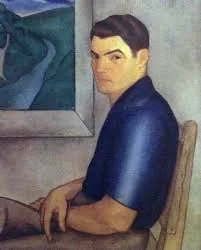
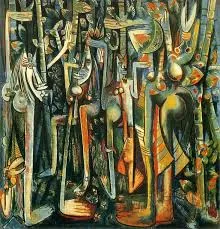
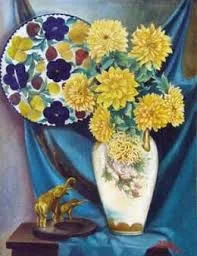
In the 20th century, with the advent of the Republic, a group of painters and sculptors who had been disciples or were in some way linked to the aesthetic assumptions of the San Alejandro school, where academicism played an important role, carried out their work. Names such as Víctor Manuel, Carlos Enrique, Fidelio Ponce de León, Mariano Rodríguez and René Portocarrero, among others no less important, displayed their plastic work in this period, often in the face of the incomprehension of their contemporaries. The North American influence is felt, mainly in advertising, not always fully conceived from artistic postulates.
With the triumph of the Cuban Revolution, on January 1, 1959, the framework of the island's international relations was modified and the Soviet Union became, to a large extent, a reference for society and culture. At the same time and in line with the conceptions of Eastern Europe, art proposed to bear witness to the social transformations that were taking place and to get closer to the people, which represented a change of aesthetic sign, which opened new spaces of creation in the plastic arts but closed other equally valid ones. The founding of cultural institutions such as the UNEAC (National Union of Writers and Artists of Cuba) allowed a greater dissemination of plastic works but at times there was a harmful subordination of art to political propaganda, mainly in the 1960s and 1970s. After the special period and the disenchantment that prevailed in the 90s, also reflected in the field of plastic arts, contemporary artists opt for installations, participation of the public, pop art and other paths that show greater aesthetic freedom.