Guillermo Collazo Tejeda was born in Havana, on June 7, 1850, and died in Paris while still young, on September 26, 1896. He belonged to a family of patriots, many of whose members actively participated in the Ten Years' War and other insurrectionary movements, among them his brother Enrique Collazo, who reached the rank of General of the Liberation Army. When he was 17 years old, in 1868, he was in Santiago de Cuba, and, after the execution of one of his cousins, his parents managed to get him to embark on a schooner to the United States.
There is not much information about the period of his life in which he remained in the northern country, although it is known that he received classes in New York, in the workshop of the painter Sarony. He had an apartment on Victor Hugo Street, where he had works of art of unbeatable quality on display; which also constituted a conspiratorial center attended by the main figures who, since emigration, supported the independence movement and the coordination of expeditions loaded with weapons, ammunition and other war supplies.
Upon returning to Cuba he had already achieved notoriety among the highest levels of society and his work was in high demand. He had links with other artists, such as Cabanel, Durand, Calorús and Bonnat, as well as writers, among whom was the distinguished poet Julián del Casal, who wrote some texts that allow us to delve into the pictorial universe of Guillermo Collazo and the exquisiteness of his plastic work.
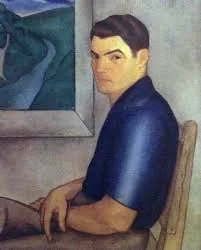
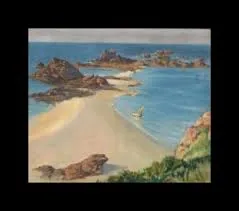
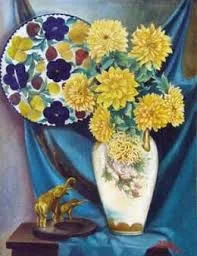
His work developed mainly in the field of portraiture and the brush description of emotional landscapes. Many Havana ladies posed for the artist, who captured contemplative attitudes, young people reclining on couches, pensive ladies in pure nineteenth-century style, patios ornamented with showy plants and, in general, works of a preciousness that sometimes became excessive, but that did not disdain his romantic and deep Cuban imprint.
Among his emblematic portraits are those of Mrs. Malpica and that of Mrs. Emelina Collazo de Ferrán, both made before his departure to France. On the other hand, French painting had a powerful influence on his work, but in it a properly Creole way of doing things prevailed, authentic in its expressions. As Casal says, "Everything that comes from his brush is refined, exquisite, exquisite."