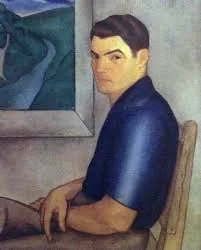
José A. Bencomo Mena was born in Remedios, Villa Clara, on August 1, 1890. Since he was a child, he showed a love for painting. Later he moved to Havana and enrolled in the San Alejandro School; There, due to his excellent results, he was awarded a scholarship to continue his artistic studies in Europe, where he toured several countries and was able to update himself on what was happening in art in the main cities of the old world.
He lived in Italy for 8 years, during which he had the opportunity to access the most important sources of Western art, the cradle of the European Renaissance and the main motifs and techniques that were still in vogue at his time. In the emblematic city of Florence he studied engraving, both etching and woodcut, being one of the pioneers in Cuba in this field of creation.
This stage of his life allowed him extensive academic training and direct contact with the most varied and prolific artistic creation of his time. In this sense, he had the opportunity to study mural procedures at the Institute of Decorative Arts of the School of Encaustics in Rome, as well as Pompeian procedures and processes, in different art centers. Not only was he a scholar but he had the opportunity to exhibit his works in halls of some importance, thereby gaining notoriety outside of Cuba.
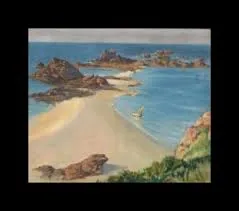
Upon returning to the Island, he continued his work as an artist. He exhibited his work in the halls of the Diario de la Marina, with considerable success. Later, in 1928, he was appointed professor at the Academy of San Alejandro, thus joining an elite teaching staff. The following year, 1929, he obtained the Silver Medal at the Ibero-American Exhibition in Seville, with a landscape of particular color and vitality.
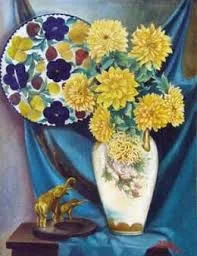
He was one of the precursors of the dialogue between plastic arts and other arts, for example with the execution of the painting Rimas de Bécquer. Among his best-known works are The Wallet, The Orphan, Practice of Virtue, Rumination, In the Garden of Hetzemaní, Guajiro Sin Tierra, Eviction (the last two are good exponents of the treatment of social themes), Father, The Tank, The Criollo and Franciscan Emotion, among others. In this painter the native and the ecumenical are harmoniously intertwined.